
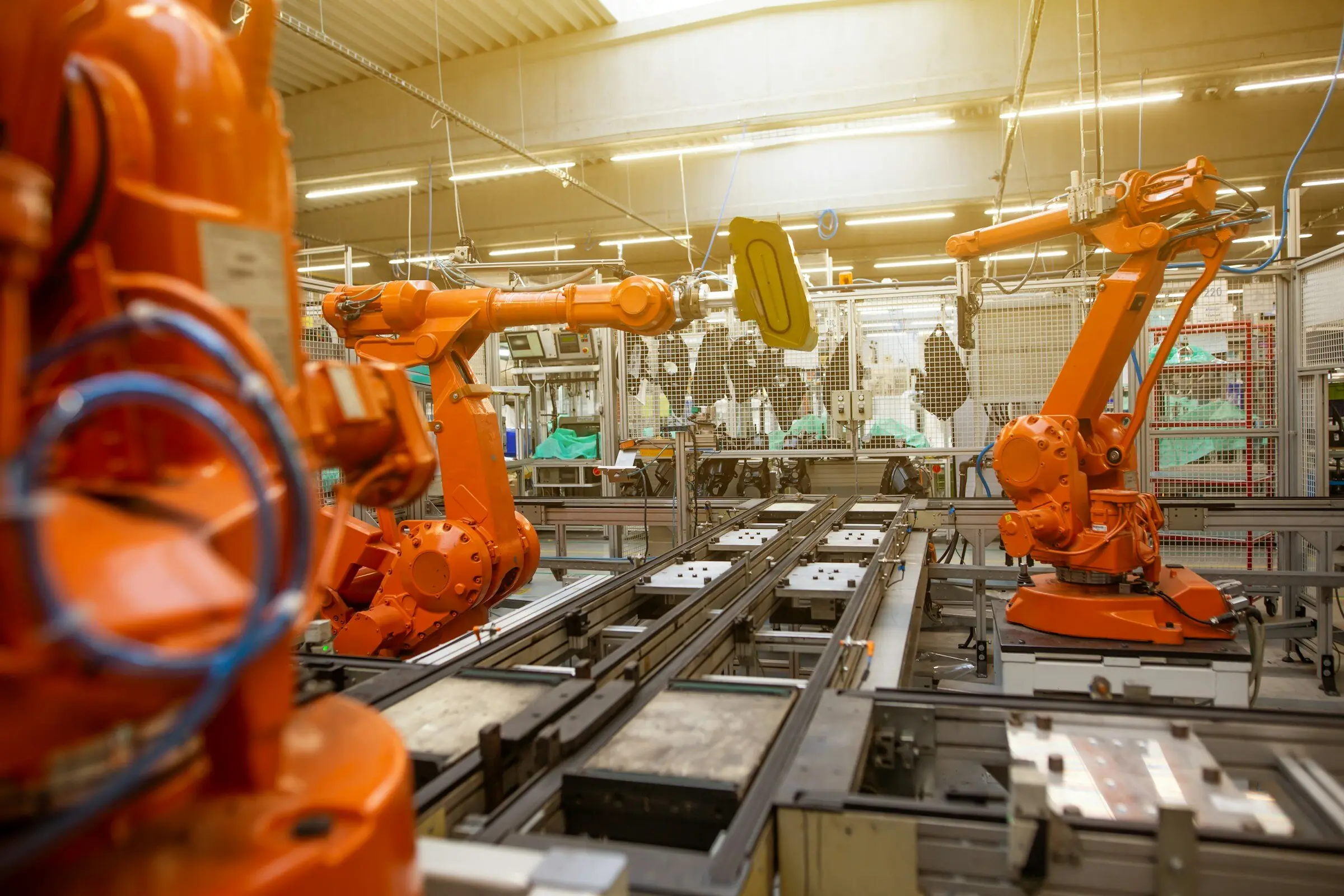
What is the Fourth Industrial Revolution?
The Fourth Industrial Revolution is the latest phase in the long history of human industrial development, marked by the convergence of digital, physical, and biological technologies. The term was first introduced in the early 2010s in Germany as part of a national strategy to develop smart manufacturing. The goal is to enhance efficiency, flexibility, and the industry’s ability to adapt to the increasingly rapid and complex changes in the global market.
Looking back, the journey of the industrial revolution has gone through four major phases. The First Industrial Revolution began in the late 18th century, marked by James Watt’s invention of the steam engine. This innovation replaced human and animal labor and gave rise to the world’s first factories. The Second Industrial Revolution occurred in the early 20th century with the advent of electricity, mass production, and the assembly line pioneered by Henry Ford, which radically transformed how industry operated.
Subsequently, the Third Industrial Revolution emerged in the late 20th century with advancements in computer technology, automation, and the internet. This phase introduced the world to digital systems, software, and fast, efficient global communication. Industry began shifting from manual processes toward computer-based automation. Now, the world is entering the Fourth Industrial Revolution, which focuses on the integration of physical and digital technologies through the internet. In this era, production systems no longer operate in isolation but are interconnected and communicate in real-time. Concepts such as the Internet of Things (IoT), Artificial Intelligence (AI), Big Data, Cloud Computing, and intelligent robotics form the backbone of major changes in how humans work and interact with technology.
Characteristics of the Fourth Industrial Revolution
The Fourth Industrial Revolution is marked by fundamental changes in how humans, machines, and systems interact with one another. This era emphasizes connectivity, automation, artificial intelligence, and the large-scale utilization of data to support rapid and efficient decision-making processes. Unlike previous industrial revolutions that focused on mechanization and computerization, the Fourth Industrial Revolution brings about a comprehensive integration between the physical and digital worlds through interconnected technologies.
One of the key characteristics of the Fourth Industrial Revolution is the integration of the physical, digital, and biological worlds. This means that the boundaries between machines, digital systems, and humans are becoming increasingly blurred as all elements interact within a single interconnected ecosystem. For example, production systems can collect and analyze data in real time, then automatically adjust processes without human intervention. Another key characteristic is high connectivity through the Internet of Things (IoT). This technology enables various devices—such as machines, sensors, and computers—to communicate with one another via the internet. With this connectivity, every industrial process can be monitored, controlled, and optimized remotely, thereby improving efficiency and reducing the potential for errors. Additionally, the Fourth Industrial Revolution heavily relies on the use of big data. Data generated from various sources—such as sensors, digital transactions, and social media—is processed using advanced analytics to generate insights that support business decision-making. The characteristics of the Fourth Industrial Revolution reflect a shift toward integrated, intelligent, and data-driven systems.
The Connection Between the Fourth Industrial Revolution and Starlink Satellite Internet
The Fourth Industrial Revolution relies on high connectivity and widespread internet access. This is where satellite internet technology, such as Starlink, plays a major role in expanding digital reach to areas not yet served by conventional networks. One of the main challenges in implementing the Fourth Industrial Revolution in Indonesia is the digital infrastructure gap. Many remote areas do not yet have fiber-optic networks or stable broadband, even though technologies such as IoT, AI, and Big Data require fast and consistent connections.
Starlink offers a solution through a Low Earth Orbit (LEO) satellite system capable of providing high-speed internet without relying on terrestrial cables. Satellite internet supports the core principles of the Fourth Industrial Revolution: interconnectivity and real-time data access. With widespread connectivity, industries in non-urban areas can implement automation systems, remote monitoring, and cloud-based management just as they do in urban centers. This accelerates the digitalization of vital sectors such as agriculture, fisheries, energy, and education. Starlink is not merely an internet service provider but a key component of the technological ecosystem driving the acceleration of the Fourth Industrial Revolution in Indonesia. With unlimited connectivity, industrial transformation can reach all segments of society and regions.
Easy and Fast Satellite Internet Integration
In the era of the Fourth Industrial Revolution, data has become a new resource that determines the direction of industrial innovation and efficiency. To maximize the use of data from various sources, a large-scale storage solution capable of handling diverse types of information is required. Starlink offers several package options, including Residential (for home use), Roaming (internet access for travel), and Residential Lite. Users will receive a satellite dish, router, and cables. Contact sales@datalake.id to obtain original, reliable, and warranty-backed equipment.