
Connectivity in the Digital Age
In today’s digital age, having a fast internet connection is a must-have for everyone. A wide range of activities, from work to gaming, all require fast internet performance. But what if the question is, which technology is the best fit for you? Amid so many options, the two most prominent technologies of this era are fiber optics and satellite internet (Starlink). In this article, we’ll thoroughly explore how they work, their advantages, and the differences between them.
Differences Between Starlink and Fiber Optics
Starlink is a satellite internet service operated by SpaceX. It doesn’t use ground-based cables but transmits data via satellites orbiting the Earth at low altitudes. The internet signal is sent from ground stations and then relayed to the user’s antenna. As long as the antenna has a clear view of the sky, users can get an internet connection even in remote areas. Installation doesn’t require complicated cabling, and various packages make it easy for users to use it anywhere and anytime.
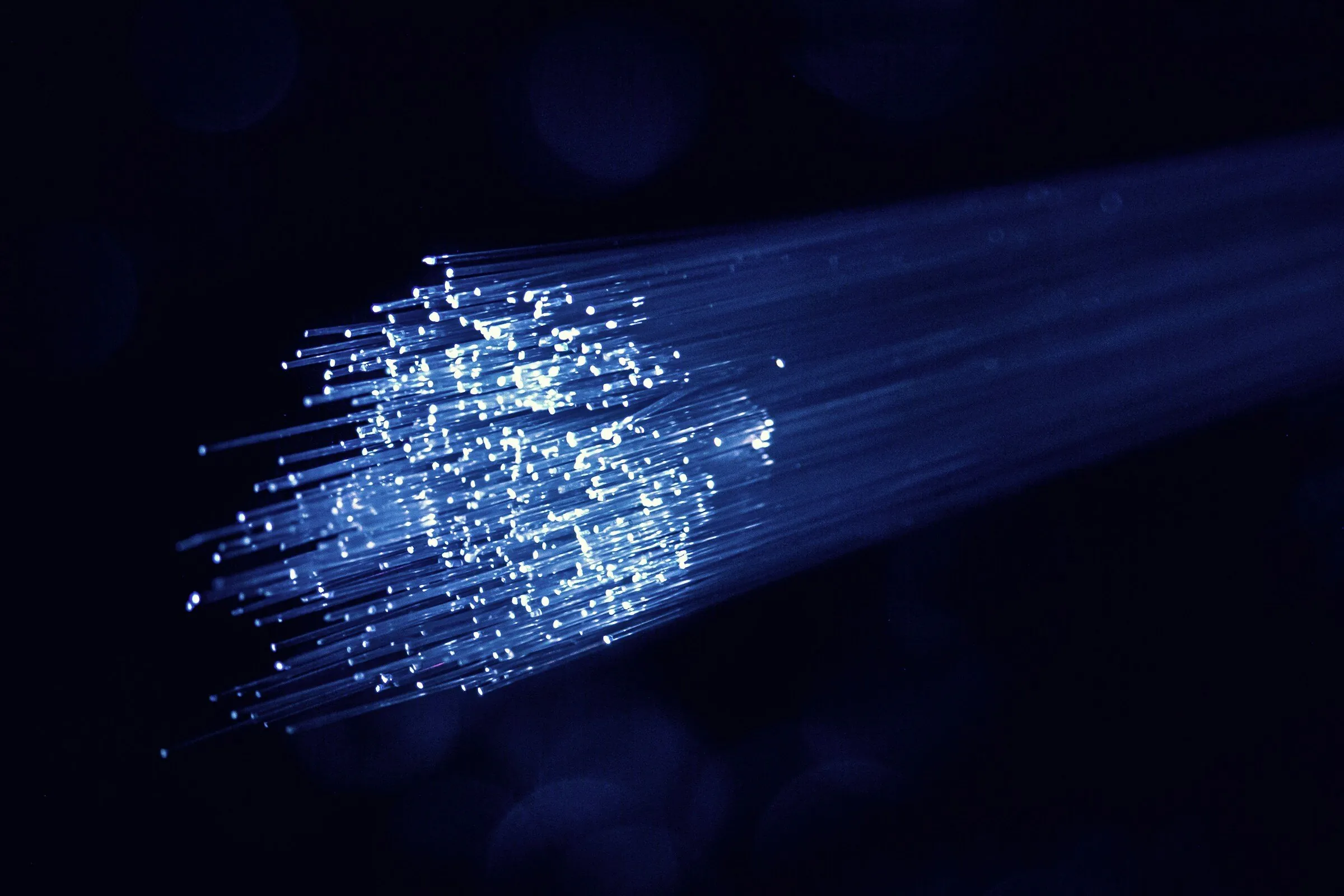
Fiber optics: internet at the speed of light. Fiber optic technology works by transmitting data in the form of light signals through optical fibers made of pure glass or plastic. Unlike Starlink, fiber optics rely on cables buried underground or strung on poles to connect to the network.
In terms of availability and coverage, Starlink can be used almost anywhere without the hassle of laying cables to connect to the internet. Fiber optics are strictly limited to areas already covered by cable infrastructure. So, although fundamentally different, both dominate in their own ways. One provides extreme speeds in densely populated areas, while the other ensures access is available anywhere.
Key Comparison
Speed and Latency
Fiber Optics: superior in speed and upload rates, lower latency
Starlink: Fast and consistent for a wide range of high-demand needs
Availability and Coverage
Fiber Optics: limited to areas with existing cable infrastructure, such as urban areas
Starlink: practically available anywhere, making it the only option for many remote areas
Cost
Fiber Optics: significant upfront hardware costs, potentially higher monthly fees
Starlink: No installation fees, various package options tailored to needs
The Right Choice for Your Needs
Ultimately, each technology has its own strengths and limitations that make it ideal for specific situations. The best choice naturally depends on the user’s priorities when using internet services to meet their needs. Fiber optic is indeed exceptional, but its advantages hinge on one key factor: availability. Fiber networks require substantial investment and complex physical infrastructure, such as underground cable trenches or utility poles along roads. Millions of people in rural areas or on small islands are effectively cut off because of this. This is the biggest drawback of fiber optics—it cannot meet connectivity challenges everywhere.
Starlink is here to address these challenges. Instead of relying on cables laid on land, Starlink utilizes a constellation of small satellites orbiting low in Earth’s atmosphere. This is a future-oriented revolution no longer bound by expensive and complex ground infrastructure. As long as the sky is clear, users can access high-speed internet with download speeds reaching 100–200 Mbps and low latency. Starlink offers unmatched flexibility. It serves as a complement that fills the significant gap left by cable infrastructure. It is a technology that does not view location as a barrier, but rather as an opportunity to connect. It ensures that no region is left behind, but instead makes the internet available to all segments of society.