
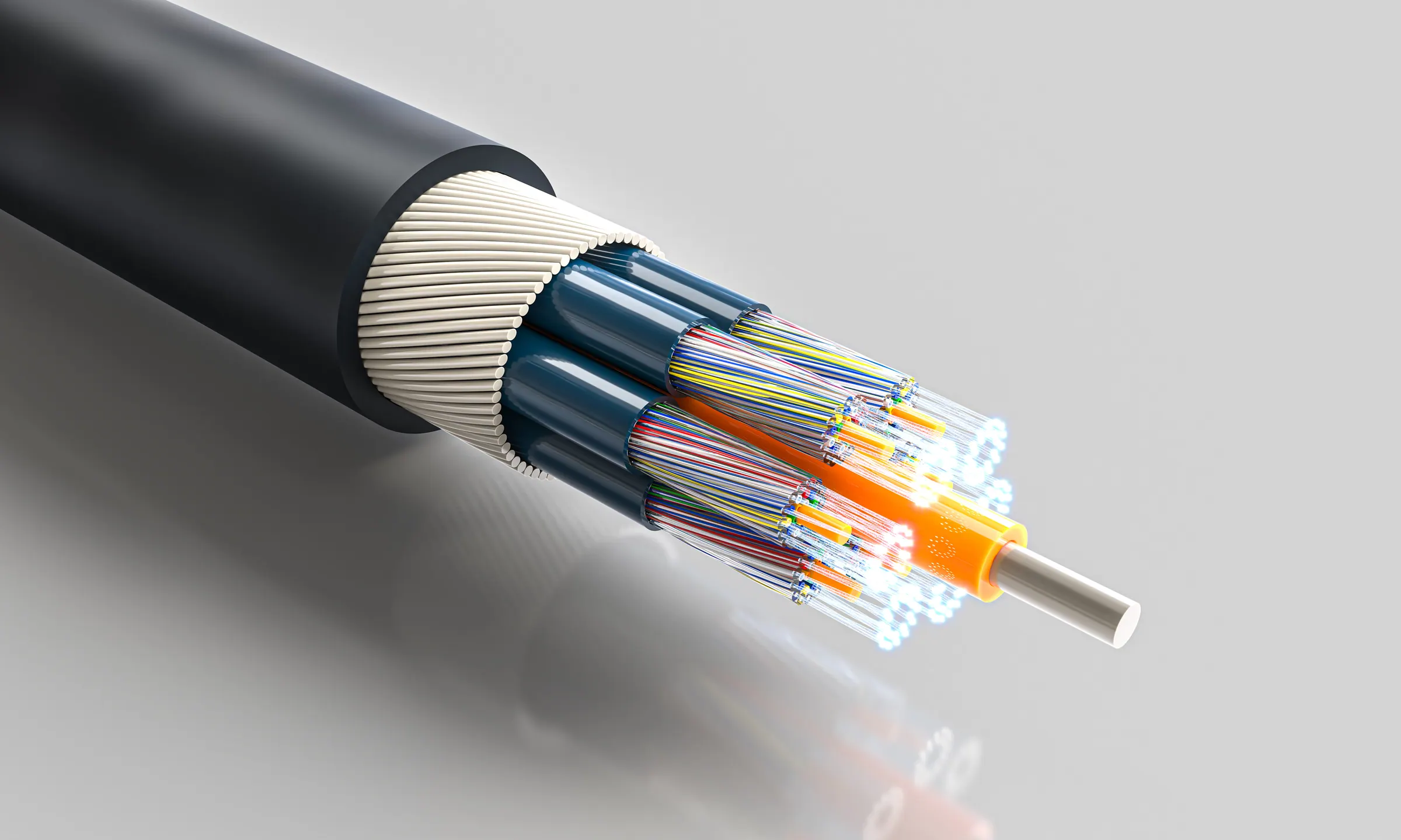
High Cost of Fiber Optic Development
One of the main reasons why fiber optic has not entered all areas is the very high cost of infrastructure development. Installing a fiber optic network is not limited to pulling cables, but also includes ground excavation, building poles or ducting, installing distribution equipment, and labor and maintenance costs. This process requires major investment, especially if the target area has long distances between towns or difficult terrain.
In urban areas with a dense number of users, these costs can still be covered through a large number of customer subscriptions. However, in areas with low population density, internet service providers must reconsider investment feasibility. If potential customers are few, the return on investment will take longer.
In addition, fiber optic network maintenance costs are also not small. Damage caused by construction projects, natural disasters, or environmental disturbances can increase operational burdens. This is why fiber optic development tends to be faster in major cities than in remote areas. Economic factors become a main consideration in equalizing fiber-optic-based internet networks.
Geographical and Infrastructure Challenges in Remote Areas
In addition to cost factors, geographical conditions are a major reason why fiber optic has not reached all areas. Indonesia has a diverse landscape, ranging from mountains, dense forests, and large rivers to island regions separated by the sea. Installing fiber optic cables in terrain like this requires complex technical planning and additional costs to reach hard-to-access areas.
In hilly or mountainous areas, the cable-pulling process requires extra excavation and protection so the network is not easily damaged. Meanwhile, for island regions, installing submarine cables requires special technology and much larger investment than land installation. The risk of damage from land shifts, floods, or sea activity is also a consideration.
In addition to natural conditions, limited supporting infrastructure such as roads, electricity, and logistics access also slows fiber optic network development. Without adequate basic infrastructure, installation and maintenance become more difficult and expensive. This is why many remote areas are still not reached by fiber optic networks even though internet needs continue to increase.
Complex Permitting and Regulatory Processes
In addition to cost and geographical factors, the permitting process is another challenge in building fiber optic networks. To pull cables in an area, service providers must arrange various permits, from excavation permits and land-use permits to coordination with local governments and related agencies. This process can take a long time because it involves many parties and different regulations in each region.
In some areas, cable installation must also adjust to spatial planning, other infrastructure projects, or local policies. If policy changes or administrative obstacles occur, projects can be delayed. This makes fiber optic network expansion not always move quickly, even though internet needs in society continue to increase.
This condition has then encouraged the presence of alternative solutions such as Low Earth Orbit (LEO)-based satellite internet, one of which is Starlink. Unlike fiber optic, which depends on physical cable pulling and cross-regional permits, Starlink uses a network of low-orbit satellites so it does not require long terrestrial cable infrastructure development. Installation is relatively simpler because it only requires a terminal device (antenna) and a power source.
With this approach, solutions such as Starlink can become a strategic option for reaching areas that are administratively and technically difficult to equip with fiber optic networks.
Business Feasibility and Number of Users Considerations
In addition to technical factors, fiber optic network development is also strongly influenced by business considerations. Every project requires major investment, so service providers need to ensure that the number of customers in an area is sufficient to support operational sustainability. If potential users are few or scattered, the return on investment can take longer.
In major cities, this is usually not an obstacle because population density is high and internet demand is large. However, in areas with limited populations, service providers must carefully calculate whether fiber optic network development is financially feasible. If not, expansion is often delayed or prioritized for other areas with greater potential.
In addition to the number of users, purchasing power and market needs are also considered. If the service does not match the ability or needs of the local community, adoption rates can be low. This is why fiber-optic-based internet distribution is not yet fully even, because expansion decisions are not only about technology, but also long-term business sustainability.