
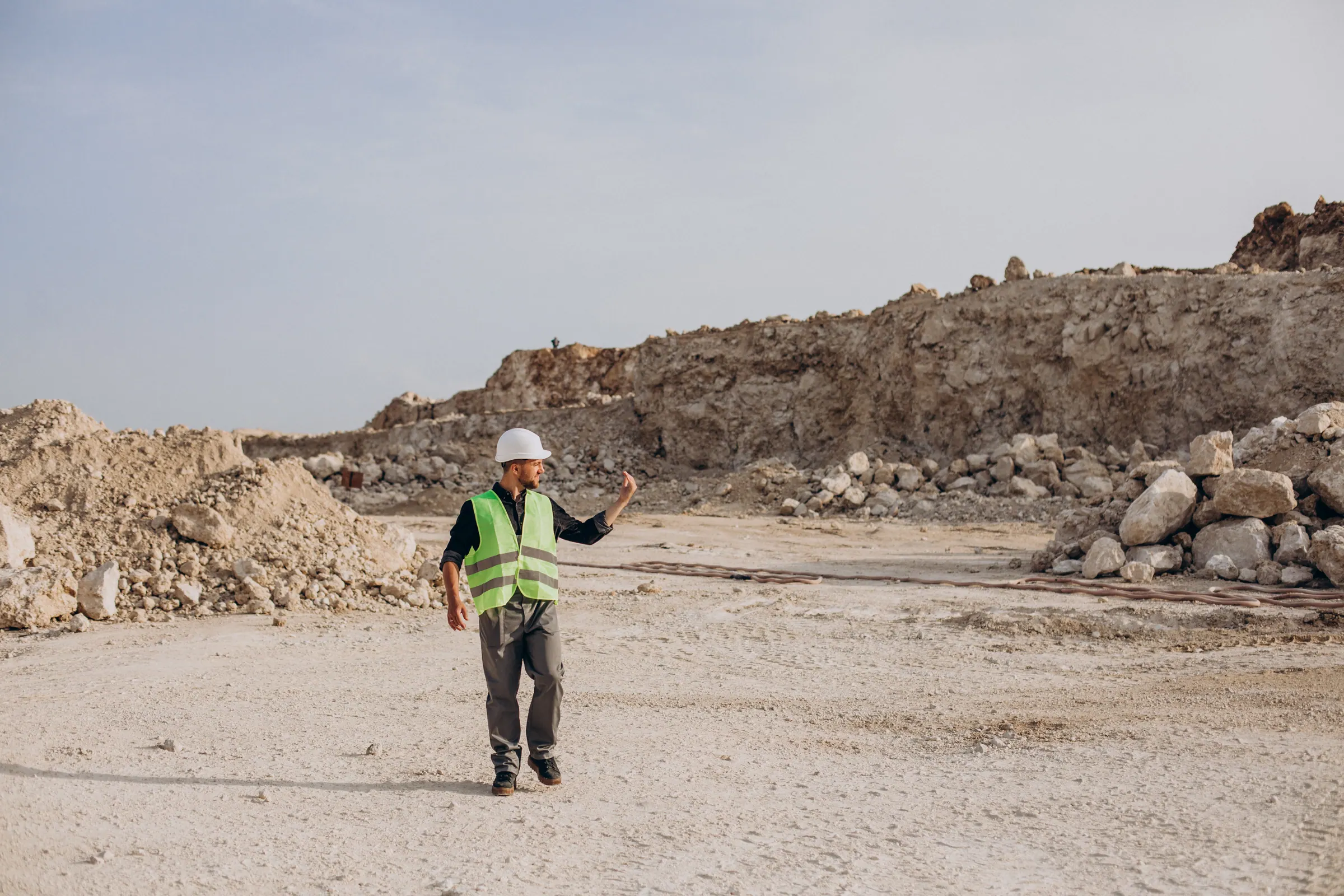
Internet Connectivity in Mining Areas
Mining areas are generally located far from city centers, such as in the middle of forests, mountains, or regions with limited access. This condition makes internet network availability a challenge in itself. Infrastructure such as fiber optic or cellular networks often has not reached mining locations, so internet connections are difficult to obtain or unstable.
In addition to long distances, geographical conditions also affect network quality. Difficult terrain, vast open areas, and minimal supporting infrastructure make cable network development require large costs and a long time. As a result, many mining companies have to work with limited internet connections.
In fact, modern mining operations depend heavily on connectivity. Communication between field teams and headquarters, sending project reports, and monitoring activities at mining sites require stable internet access. Without adequate connectivity, coordination processes can be hampered and affect work efficiency.
Satellite Internet Technology and Starlink’s Advantages for Mining Areas
To overcome network limitations at mining sites, many companies are starting to consider satellite internet as a solution. Unlike cable networks that depend on terrestrial infrastructure, satellite internet can deliver a direct connection from satellite to devices at the mining site. This allows internet access to remain available even if the area is far from fiber optic networks or cellular towers.
One widely used technology is Starlink, which uses a low Earth orbit (Low Earth Orbit/LEO) satellite network. This technology enables internet connectivity with lower latency and more stable performance than conventional satellites. With broad coverage, Starlink can reach mining locations that previously had difficulty getting internet access.
In addition, the Starlink installation process is relatively fast and does not require complex cable infrastructure development. The device can be installed directly in the mine work area and used as long as there is a power source and open space for the antenna. These advantages make Starlink a practical and flexible solution to support mining operations in various remote locations.
Starlink Options Suitable for Mining Needs
In mining operations, internet needs are usually divided into two types: connectivity for mobile field teams and connectivity for main operational areas such as site offices, control rooms, or base camps. Therefore, selecting Starlink equipment needs to be adjusted to field needs.
For field teams or mobile workers, devices such as Starlink Mini can be a practical choice. This device is more compact and easy to move, making it suitable for survey teams, technicians, or operators who work across different locations in mining areas. With speeds of up to around 100 Mbps, Starlink Mini is sufficient for communication, sending reports, accessing cloud systems, and online meetings.
Meanwhile, for internet coverage in the main mining operational areas, such as project offices, monitoring rooms, or employee camps, Starlink Standard or Starlink Business devices are more suitable. These devices are designed for more intensive use and can serve more users at the same time, supporting activities such as heavy equipment monitoring, sending operational data, and cloud-based project management systems.
With the right combination of devices, mining companies can ensure internet connectivity remains stable both for teams working in the field and for operations in the project’s main area.
For consultation on connectivity needs in mining areas and selecting the appropriate Starlink package, Data Lake serves as a solution and service procurement provider. More information about implementation and ordering can be obtained by contacting the Data Lake team by email at sales@datalake.id.
Frequently Asked Questions (FAQ)
1. Is Starlink suitable for use in remote mining areas?
Yes. Starlink is designed to provide internet connectivity in various locations, including remote areas not yet reached by fiber optic networks or cellular signals. With low Earth orbit (LEO) satellite technology, the connection can remain stable as long as the device has a sufficiently open sky view.
2. What are the benefits of Starlink internet for mining operations?
Starlink internet helps improve mining operational efficiency, such as communication between field teams and headquarters, real-time report delivery, heavy equipment monitoring, and access to cloud-based project management systems.
3. Which Starlink device is suitable for field teams in mining areas?
For mobile needs in the field, devices such as Starlink Mini are suitable because they are more compact and easy to move. With speeds of up to around 100 Mbps, this device is sufficient for communication, data delivery, and project coordination.
4. Can Starlink be used for the entire mining operational area?
Yes. For larger operational area needs such as site offices or base camps, Starlink Standard or Starlink Business devices can be used to support many users and digital activities at the same time.
5. How can companies get Starlink service for mining needs?
Companies can consult with solution providers such as Data Lake to determine the device and package that match project needs. More information about implementation and ordering can be obtained through email at sales@datalake.id.
.